
💥Figure 1: Muscles balancing the pelvis. 👉The muscles that are primarily responsible for pelvic stabilization include: gluteus medius, gluteus maximus, pirformis and deep core muscles. 💥Figure 2: The pelvic cross syndrome. 👉 The Pelvic Cross Syndrome is characterised by a tightness of the hip flexors and back muscles and a weakness (inhibition) of the Gluteal muscles, abdominals and the hamstrings. Signs of a Pelvic Cross Syndrome are: Symptoms are often pain and tightness of the bottom of the lower back. . . . . . . Follow @mukulfitphysio . . . . . #yoga #fisioterapi #pt #healthylifestyle #sportsinjury #occupationaltherapy #dpt #anatomy #o #workout #repost #neckpain #movement #painrelief #manualtherapy #osteopatia #massagetherapy #medical #sportsphysio #sports #healthcare #injuryprevention #sportstherapy #running #doctor #medicine #kneepain #prehab #n #strength - @mukulfitphysio on Instagram

- Benefits of sleep


- Anabolic Diet

- First Aid Kit


- Physical therapy education

- Nerves function

- ANATOMY OF THE BODY


- Axillary nerve

- hip muscles

- Carpal Tunnel

- muscles of the body

- Fibromyalgia Pressure Points


- Human joints

- KT Tape

- Respiratory System

- working too damn much


- hip replacement exercises

- Human Anatomy

- Sacroiliac joint dysfunction

- Radiographic Positioning

- Anatomy References for Art


- Cold and Flu

- Exercise


- Massage corps

- Elbow Anatomy

- anatomy

- Anatomy


🚨 𝐇𝐎𝐖 𝐓𝐎 𝐔𝐍𝐋𝐎𝐂𝐊 𝐘𝐎𝐔𝐑 𝐋𝐎𝐖𝐄𝐑 𝐁𝐀𝐂𝐊! 🚨 Follow @allpainrelief for more Follow @allpainrelief for more . We will be choosing one person to work with (for FREE!) and correcting whatever they need to work on (form assessment of their lifts, suggesting exercises, injury prevention, etc). Simply 𝗟𝗜𝗞𝗘 and leave a 𝗖𝗢𝗠𝗠𝗘𝗡𝗧 with the hashtag #LuHelpsYou along with what you need help with! ▃▃▃▃▃▃▃▃▃▃▃ . With most of us still practicing social distancing, some of us are finding ourselves sitting more and not moving as much during these times. The lower back can generally take the load and generally feel tight. Gently stretching and/or mobilizing the area will help create more space and promote more movement in the area for healthier tissues and joints. It is also important to follow up with stability exercises to help cement the results you created. 1️⃣ 𝗗𝗢𝗪𝗘𝗟 𝗦𝗘𝗟𝗙 𝗧𝗥𝗔𝗖𝗧𝗜𝗢𝗡: Lay face up on the ground underneath a squat rack or door frame. Have a dowel at slightly further than arms length and pressed against the squat rack. With the knees bent to roughly 45 degrees, press the dowel against the squat rack and yourself away. 2️⃣ 𝗟𝗢𝗪𝗘𝗥 𝗕𝗔𝗖𝗞 𝗧𝗥𝗔𝗖𝗧𝗜𝗢𝗡: Place a stability ball on a bench and lay face down on it. Grab onto the bench with both hands for support. Relax the lower back and lower body as much as you can and let gravity pull the legs down towards the ground. Be sure to have the stability ball at abdominal level. 3️⃣ 𝗘𝗟𝗗𝗢𝗔 𝗦𝗧𝗥𝗘𝗧𝗖𝗛: Sit on the ground with your back against the wall. Have the legs bent with the knees pointed outwards and ankles completely flexed. Sit as tall as you can to help lengthen the spine. Raise both arms overhead with the wrist bent and fingers pointed outwards. . 🚨 𝗟𝗘𝗧 𝗠𝗘 𝗛𝗘𝗟𝗣 𝗬𝗢𝗨 𝗠𝗢𝗩𝗘 𝗔𝗡𝗗 𝗣𝗘𝗥𝗙𝗢𝗥𝗠 𝗣𝗔𝗜𝗡 𝗙𝗥𝗘𝗘 📷 @lustrengththerapy . #sensorydeprivation #neckpainrelief #chiropractors #innateintelligence #triggerpointtherapy #painfreeliving #muscletherapy #muscletension #lowbackpain #backpainsucks #chronicbackpain #backpainsupport #backpains #backpainsolution #backpaintips #painreliever #lowerbackpain #shoulderpain #tensionrelief - @allpainrelief on Instagram

- Dr Ali

- Human Anatomy

- OSGOOD SCHLATTER DISEASE

- Muscles of Upper Limb

- Neuromuscular Therapy

- Physical therapy education

- Anatomy

- ANATOMY

- Bones

- Frozen shoulder exercises

- Fitness

- Blood Test

- knee

- Celiac disease symptoms

- Circulatory System Diseases

- Shoe Sketches

- yoga posses

- horse hay

- Hip injuries

- Anatomy


- muscle names


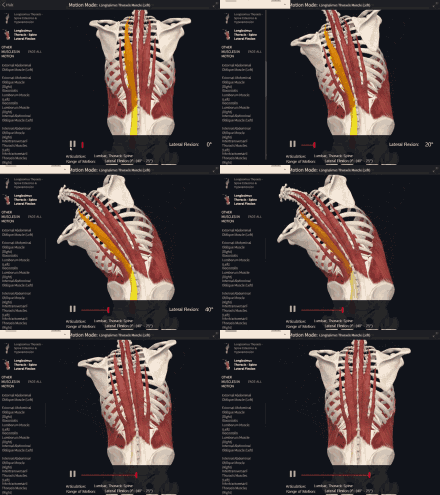
The external oblique causes ipsilateral nutation by pulling the ilium posteriorly, while rotating the rib cage down and towards the contralateral pelvis, increasing the ipsilateral lordosis. It also assists the contralateral internal oblique in inducing contralateral counternutation. - @serolabiomechanics on Instagram


Follow @medpert for more... - @medpert on Instagram


- Cervical spinal stenosis

- Health

- Best Shape of My Life


- Acupressure Points

- Musculoskeletal System

- Anatomy of the neck

- Shoulder Bursitis

- Anatomy


One of the major side effects of the obesity epidemic is a tremendous amount of arthritis, says Philip A. Kern, MD, an endocrinologist... Years and years of wear and tear on the joints are only exacerbated by carrying more weight. SRC: http://bit.ly/1MueD6W #HAES #HonorYourCurves #BBW #OnlyDogsLikeBones #FatAcceptance #HealthAtEverySize #effyourbeautystandards - @healthateverysize on Instagram

- Shoulder Anatomy

- Patellar Tendonitis Exercises

- facial muscles


- Knee ligament pain

- hip anatomy

- Lower Right Back Pain

- How to ease pain

- Medical Coding

- Physical Therapy School

- ...DRY BONES SHALL RISE AGAIN...

- Anatomy

- back exercise

- foot&ankle

- Anatomy

- Achilles

- AS

- Anatomy, Back, Stretches

- Anatomy

- Anatomy

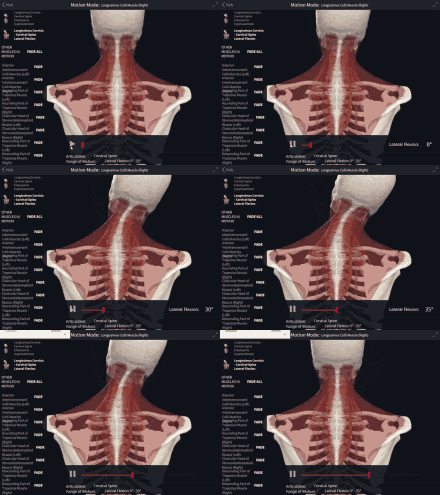
- Heel pain

👉 Em que lugar na coluna você sente mais dores??? . 1️⃣ Cervical - é composta por 7 vértebras e o desalinhamento pode provocar dores de cabeça, formigamento nos braços/mãos, tontura, zumbido nos ouvidos, dor muscular no pescoço e ombros, entre outros . 2️⃣ Dorsal - é composta por 12 vértebras e alguns sintomas como dificuldade para respirar, dores nos ombros, problemas estomacais, azia, podem estar relacionados com está parte da coluna . 3️⃣ Lombar - é composta por 5 vértebras, e além de dor, é comum também dor nos glúteos, nas pernas, panturilhas, formigamento, problemas nos joelhos, tornozelos e pés, entre outros . 🆘 A dor na coluna é um sinal de que algo está errado, mas nem sempre é um sintoma de doença. O importante é encontrar a causa desta dor e tratá-la de forma correta 😉 . 👇 Me diga, nos comentários, qual parte na coluna você sente mais dor - @renataquiropraxista on Instagram

- Acupuntura

- Anatomy Bones

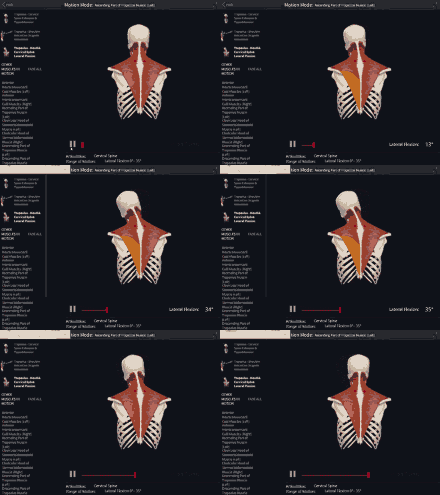
- Partial Knee Replacement

- Reverse Shoulder Replacement

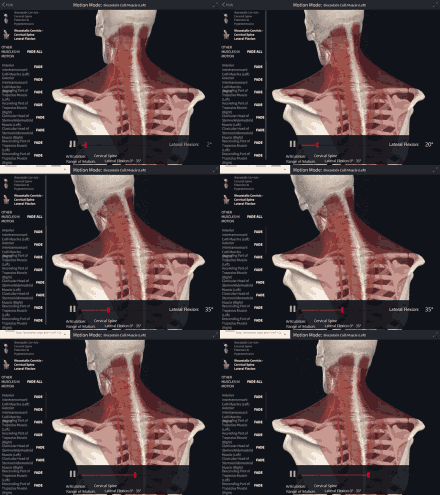
- Interesting.


- Spicy tuna salad

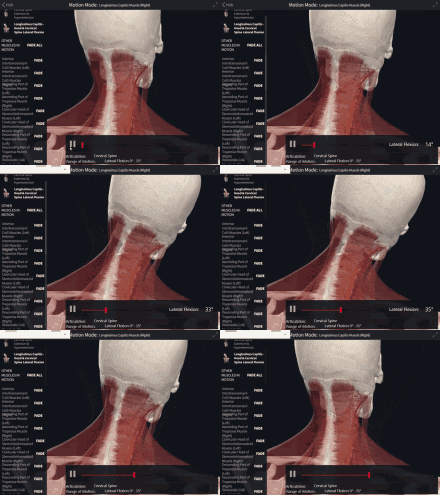
- Archery subjects


- Anatomy

- Calf anatomy

- Anatomy

- Arm muscle anatomy

- General tips and cures

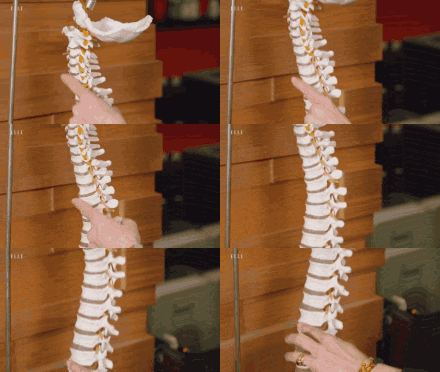
- Cath Lab

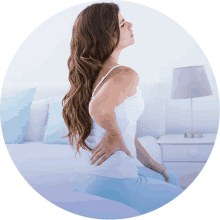
- Health and Fitness

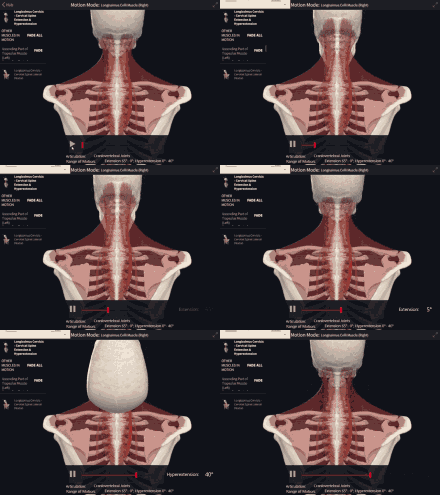
- Anatomy Physiology

- BODY

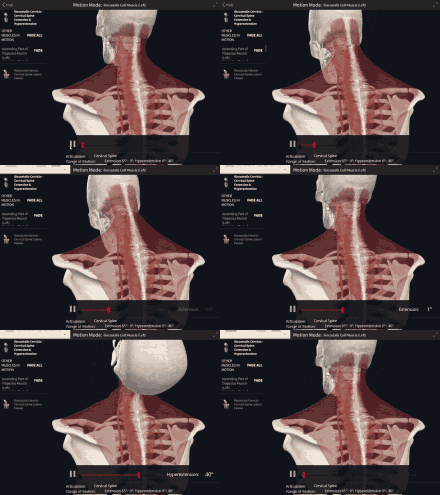
- Autoimmune disease

- Anatomy

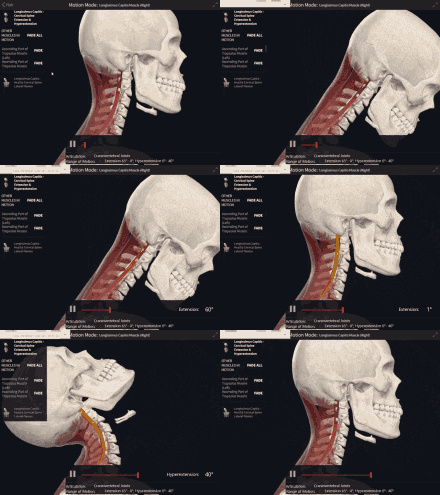
- Anatomy - App. Skeletal - Joints

- Chakra Root

- Agriculture Stuff

- Hip Replacement Info, Surgery & Recovery

- Franklin method

🚨*S H I N S P L I N T S*🚨 Feeling like the muscles in your shins are being ripped away from the bone every time you run, jump, or walk?🍌🍖 • Then this post might be for you! • Medial Tibial Stress Syndrome (Shin Splints) is a condition that may involve a variety of muscles, tendons, bones, & more specifically, the periosteum (outer layer of bone) in our lower leg. For most body parts when we start a new activity or something we haven’t done in a long time without proper progression, the result is irritation to some degree. That exact formula + repeatedly doing the same irritating activity (jogging, sprinting, jumping jacks) many times is a key ingredient in the recipe for shin splints.🧑🏼🍳🥗🥩 • As a PT, I am interested in the *why* - the reason behind someone’s pain, but most people are usually more interested in *what* to do about it. For someone dealing with shin splints, it is important to know that both tie in to each other. So here is what to do & why: • 1️⃣ Active Rest. This can be the same activity at a lesser intensity or a different activity altogether (Example: running 5 miles irritates shin splints, running 3 miles or biking 10 miles doesn’t) • 2️⃣ Strengthen & Stretch the irritated areas. This will build resilience and tolerance to those activities. Exercises in this post are a good starting point for shin splint rehab • 3️⃣ DO NOT completely stop the activity. Stopping might feel amazing, but if you don’t build resilience in these areas then you are setting yourself up for the same issue to keep coming back • 4️⃣ Slowly return to your original activity, but progress in reasonable increments that don’t irritate symptoms (ex. Add 0.25 miles to every 3rd run) • These exercises are beginning steps & don’t paint the full picture of rehab for shin splints. If you or someone you know thinks they have shin splints, reach out to a physical therapist (like myself) for an evaluation to correctly diagnose, rule out other possibilities, & to progress properly so that you can return to doing the things you love pain-free. Otherwise like/comment/share/save this post & feel free to comment/DM with questions or suggestions for future posts!📲 - @nilesnilesniles.dpt on Instagram

- Plantar Fasciitis

- Sacroiliac joint dysfunction

- Anatomy/Physiology

- Exercise

- Back Pain Training

- human brain &body

- Excercise damnit...

- Health in general

- healthy spine

- Back Pain

- ANATOMY OF THE BODY

- Skeleton system

Follow @yoga.forsoul . . Bridge Pose or Setu Bandha Sarvangasana is a calming yoga pose that helps to reduce stress, and stretches the chest, neck, and back. It also builds leg and back strength. - . #yogaaddict #onebreathatatime #yogaeveryday #yogadaily #yogapose #yogalife #yogapractice #yogainspiration - @yoga.forsoul on Instagram

- gait

- Human body and Pilates

- Body

- Lumbar Spinal Stenosis

- Hand bone

- Super perfect

- Acupressure points chart

- Pain Relief

- echo.....

- human body anatomy

- Aches and Pains

- Anatomy Physiology

- Arthritis Home Remedies

- Adult coloring ideas

- Elephant anatomy

- Back Pain

- Hip injuries

- Arthritis

🙋🏻♀️How long does Achilles tendinopathy take to get better?🤕 How long is this going to take? is the BIG question a lot of those suffering from Achilles tendinopathy want to know the answer to. The answer is, as always, it depends. Whilst some can see rapid improvement within 3 months, for a lot of those with Achilles tendinopathy, it can take 3-6 months to see improvement, with full pain resolution sometimes taking 1 year. In fact, in a study by Silbernagel, only 65% were totally symptom free at 5yrs. 🔑However, whilst SYMPTOMS may persist for sometime, getting back to the things you love doing (i.e. running, football) without the pain impeding your performance, will often take much less time, and some pain whilst exercising is acceptable. 🔑Full recovery relies heavily on consistent, ongoing self management: Because this is often a long process, it is important for anyone suffering with Achilles tendinopathy (and tendinopathy in general really) to stay the course, and be consistent with following the advice of their health practitioner. This is rarely a condition where doing a couple of exercises for a few weeks will sort it out. 🔑“Slow to settle but quick to aggravate”: Flare ups will likely happen along the road to recovery, but you should be provided with advice & support by your health practitioner on what to do in these instances. In Silbernagels 5 year study, 15% experienced a recurrence of symptoms. We advise our patients that instead of comparing their pain day to day, they take a longer term view, and compare week to week 🔑”Symptomatic recovery does NOT ensure full recovery of muscle-tendon function”: Those who achieved full symptomatic recovery, only 25% achieved full recovery of the muscle-tendon function as measured by a test battery. So this means that whilst you might be free of pain, it doesn’t guarantee that the full function of the tendon has been restored. So in conclusion, whilst Achilles tendinopathy can take a while to recover, it need not stop you from doing what you love. To read the full blog head to https://www.healthhp.com.au/post/how-long-does-achilles-tendinopathy-take-to-get-better (link in bio) - @sportschiroluke on Instagram

- DIY Arthritis, Muscle, Joint Pain

- Being Healthy

- Anat phys

- ANATOMÍA PARA SHIATSU

- Ankylosing spondylitis

- Anatomy_Science

- Hernia symptoms

- Large animal vet

- Stiff neck remedies

- Calcific Tendinitis

- Message Therapy

- knee

- Sciatica Symptoms

- Body Parts

- Being prepared...health

- Medical Massage

- Anatomy

Chances are, you’ve heard once or twice about your glute med (pronounced “gloot meed”), especially if you’ve had any issues with your hip or lower back. Your gluteus medius sits on the outside of your posterior pelvis. In relation to your gluteus maximus, it’s pretty small. But it plays a VERY important role in the stability of your pelvis. It is the primary stabilizer for the pelvis when you’re standing on one foot, which happens any time you run, go up the stairs, get into a lunge position, walk…pretty important things. # One thing you might not know about the gluteus medius is that it is pain inhibited. So, if you injure your back, SI joint or hip, there ends up being a disruption between the brain and the gluteus medius. This either means the muscle atrophies to some degree or it shuts off completely. The problem is that the body is SUPER smart. There are many times that the gluteus medius isn’t working correctly and you don’t even know it because that piriformis and IT band are really good at taking over. But those muscles are not made to stabilize the pelvis and so they get tight, overactive and start creating issues like bursitis, knee pain and sciatica. # Unfortunately, the gluteus medius may not automatically “come on” if you throw the right exercises at it. There are exercises like the clamshell and lateral banded walking that target the gluteus medius. But if it’s not firing, guess what, those other muscles are taking over and could be further exacerbating your issue. # Have you tried to solve your lower back pain, knee issue or hip pain with gluteus medius exercises only to feel like the issue has not changed or even gotten worse? You may need something called neuromuscular education, which will re-establish the pathway between your brain and that muscle. Don’t know what to do for this? Guess what. I do. DM me or click the link in my bio. I can help. - @healthhealingandperformance on Instagram

- Anatomy

- Varicose Veins

- cadenas musculares

- Bone density

- low back pain

- Avulsion fracture

- Body Joints

- Anatomy

- Muscles of Upper Limb

- Best abdominal exercises

- Adaptive tools: Ring Splints, Ehlers Danlos Hypermobility

- Medical Care

- nursing

- Core & Ab Fitness

- muscle names

- Fırst aid

- Plantar fasciitis & Sciatica

- Shoulder Surgery & Recovery

- biology

- bones scann

- Body Muscle Anatomy

SERRATUS PLANK PROGRESSIONS FOR BULLETPROOF SHOULDERS Serratus anterior is an important muscle that controls how well our shoulder blade moves as we raise our arm overhead. Without this muscle functioning properly, pain with overhead pressing is a given. This simple bodyweight serratus anterior plank progression can be incorporated into a warmup or as a training exercise to get this muscle going. Its quite literally impossible to not have this muscle engaged when doing this exercise. I love the pike position progression because it really challenges your core and gets you into an overhead position (if you were in pain) relatively pain-free. KEY POINTS: Be sure to let your shoulder blades passively tuck together and not move any other part of the body. MAINTAIN tension! HOW MANY? High repetitions, with lots of holds at the top. If you enjoyed this post, follow my page @thehpm for other exercise variations and write me a comment below! - @thehpm on Instagram

- Fascia Blaster Ashley Black

- Arthritis, this is it, so debilitating!

- Anatomy

- CHIROPRACTIC adjustment

- Knee Pain

- butt

🤕 SHOULDER IMPINGEMENT 🤕 Have you been having shoulder pain while throwing, swimming, exercising (bench press, shoulder press, lateral raises, upright rows), or even simply raising your arm up over your head? Then you might want to save this post... Shoulder Impingement is a very common diagnosis that can be seen in a wide variety of people - desk workers, baseball players, swimmers, bodybuilders, and the every day average person. When we feel “impingement” there can be many factors at play because our shoulder is a very complex joint, but most frequently there is some degree of irritation of the tendons in our shoulder due to rubbing against other structures. In a healthy shoulder there is also rubbing, but the combination of repetitive motions often times with a less than ideal movement pattern can turn normal rubbing into abnormal rubbing. In situations where a complex movement like throwing causes our shoulder pain, other factors like our upper back or even hip mobility may also be the culprit. The following exercises can be used as rehab exercises or a prehab warmup for people with or without shoulder impingement - as frequently those who end up with shoulder issues are missing a well-rounded warmup in their arm care. If you believe you or someone you know has shoulder impingement and are tired of feeling like your arm is falling off after your favorite activities please like, comment, DM, save, or share this video, but please remember that even if these exercises make you feel 10x better, they are often not all that must be done. If you are in the above category, seek out a good physical therapist to evaluate your shoulder and the true source of your symptoms. - @nilesnilesniles.dpt on Instagram

- Body Muscle Anatomy

- avascular necrosis

- Ejercicio

- Stretch Armstrong

- Foot chart

- Back pAin

- How to ease pain

- ACL tear surgery and recovery

Its always hard understading the compexcities of boiology but this is a beautiful and simple diagram of the brachial plexus. From this we can truly appriciate how every injury is diffrent and why functionality of the injured arm veries person by person. - @officialerbspalsy on Instagram

➡️ POPLITEUS ✅ ORIGIN: Lateral condyle of the femur ✅ INSERTION: Posterior surface of the tibia above the soleus 💪🏼 ACTION: Flexion and internal rotation of the knee joint ☑️ NERVE SUPPLY: Tibial nerve (L4-S1) 💙 LIKE and SHARE if you learned something new today❣️🙋🏻♀️🙋🏼♂️ - @anatomy_pedia on Instagram

- Spine pain

- Lower Right Back Pain

💢SHOULDER IMPINGEMENT💢 ➡️ Do you have trouble with overhead movements 💢? Feeling like something is pinching or is getting stuck? 💁🏻♀️ While it’s important to get your shoulder properly assessed if you have shoulder pain💢, shoulder impingement can be a common problem with anyone who does a lot of overhead movements either in their jobs or in their sports ⚾️. ✅ What is typically getting impinged is the supraspinatus tendon, which is also called external anterior impingement 💢. What can also happen is external posterior impingement where the teres minor, infraspinatus, or the posterior capsule get irritated when the arm is abducted to 90 and rotated at the same time like in pitching a baseball ⚾️ or throwing a football 🏈 . ✅ Give these exercises a try to stretch and strengthen the muscles that commonly need work for shoulder impingement 🤗! 1. Prone Bicep Stretch 2. Kneeling W, Y, Lift Off 3. Banded External Rotations 4. Banded Horizontal Abductions ❤️LIKE & 🤗SHARE with your friends who have “pinchy” shoulders! - @jennchew.mpt on Instagram

- betterhealth

- Arthritis

- Hand Therapy

- physical therapy memes

- fitness

- The difference between a bullet wound and a shrapnel wound

- anatomy

- Chondromalacia Patellae

- Anatomy

- California Knee Treatment

- Hip Arthritis

- Athletic Training Products

- Running

- ACL Rehab

- Associate Professor

- Hand bone

- rehab for head neck and shoulders

- Shoulder Arthritis

- Bariatric surgery recipes

- Awesome

- Anatomy

- Foot Pain

- Body | Muscle Pain

- Football trainers

- Back Pain

- Axillary nerve

Running Injuries - Knee pain is the most common symptom of injury in runners. The most common cause of knee pain is patellofemoral pain syndrome. The hallmark of this syndrome is the gradual onset of pain in the front of the knee, near the kneecap. The pain is worse after sitting for a long time or when going up and down stairs or hills. Another cause of knee pain is iliotibial band syndrome, which affects the outside of the knee and can travel up the outer side of the thigh to the hip. Click our bio link for complete information. - @jamanetwork on Instagram

- Korma

- Back Pain

- Tension Headache

- Fatigue and pains

- Spring Training

- cadenas musculares

- Anatomy / Medical

- passive stretching

- NAT Self Help Programs

- sciatica

- ejercicio

- Costochondritis

- Art technique

- UPVOTE

- achilles tendon

- leg cramps

- Term Life Insurance

- Pinterest Chiropractic Group Board

- Anatomy

- Plantar Fasciitis

- tennis elbow

- anatomy

- Anterior pelvic tilt fix

- Tennis Elbow and Golfers Elbow

- Tendinitis

📚🔬 Taping for Patellofemoral Pain Syndrome ℹ️ℹ️ BACKGROUND: Patellofemoral pain syndrome (PFPS) is characterized by anterior knee pain and/or pain in the retro-patellar and/or peri-patellar region. ℹ️ Pain typically increases with activities such as: Squatting. Kneeling. Stair climbing. Prolonged sitting. ℹ️ The underlying causes of PFPS are multifactorial and may be associated with biomechanical and or neurophysiological changes at the pelvis, hip, knee or ankle regions. ℹ️ Taping is frequently used as part of the multi-modal management for PFPS, including: McConnell Patellofemoral Joint Taping (PFJT). Tibial Internal Rotation Limitation Taping (TIRLT). ℹ️ Clifford et al. (2020), investigated the effects of TIRLT, PFJT and no taping on perceived pain and lower limb kinematics during a lunge and single leg squat (SLS) in people with PFPS. 🔬🔬 METHODS: This cross-sectional study compared the effects of TIRLT, PFJT and no taping, on knee pain and lower limb kinematics during two pain-provoking movements in people with PFPS. 🔬 Participants with PFPS (n = 23) performed a lunge and SLS under three randomised conditions: TIRLT, PFJT and no taping. 🔬 The Codamotion system captured and analysed lower limb kinematic data in the sagittal, transverse and coronal planes. 🔬 Peak knee pain intensity during the movement was assessed using the Numerical Rating Scale (NRS). 📊📊 RESULTS: Participants reported significantly less pain with the TIRLT and PFJT techniques compared with no tape during the lunge and SLS. 📊 There was no evidence of altered lower limb kinematics accompanying pain reductions with either taping technique. ✅✅ CLINICAL SIGNIFICANCE: Both forms of taping may be useful adjuncts as the short-term benefit of pain relief may enable participation in more active forms of rehabilitation. 🧠🧠 Thoughts? Questions? Comments? 👇🏽 Write them below. 📚📚📚 SOURCE: Clifford et al. 2020. The effects of McConnell patellofemoral joint and tibial internal rotation limitation taping techniques in people with Patellofemoral pain syndrome. Gait & Posture. 82, pp 266-272. - @physicaltherapyresearch on Instagram

- Types of diseases

- Audiologist

- Symbol hand

- central nervous system

- Beauty an makeup

- Yoga Anatomy

- Achilles Tendonitis and Tendinosis

- Anatomy of the knee

- Psoas stretch

- Sleep positions

- face

- Prevention of Illnesses

- bones, anthropology

- Back Pain Training

- Heart Disease

- Knee

- Vitamin D

- Anatomy and Massage

- Hand problems

- jiu jitsu techniques

- Shoulder surgery

- aNaToMy

- Anatomy

- Anatomy Legs

- Arm fat

- spinal column

Drawing of mandibular molar with furcation involvement •This drawing shows the main anatomical features, including root trunk (part of the root from the cemento‐enamel junction [CEJ] to the furcation entrance) and root cones, and pointing at root divergence and degree of separation between roots. •The ‘bone loss’ is schematically indicated as the distance between the CEJ and the most apical part of the bone. . . . . #furcation #dentalfurcation #boneregeneration #diagnosis #periodonticsurgery #periodontics #periodontology #periomalaysia #malaysiadental #dental #dentalmalaysia #gumdisease #gum #dentist #dentalhygienist #dentalstudent #odontologia #teeth #dentistry #periodoncia #periodontitis #periodontaldisease #periodontist #periodontia #malaysiandentist #dentaleducation #tooth #gums #periodontalplasticsurgery #periodonticsurgery - @periomalaysia on Instagram

- Anatomy

- 2nd time around

- Acupuncture by Benjamin

- Foot Drop

- Taping For Pain Relief

- Human Anatomy/dissection

- Anatamy

Home booty workout 🍑 Tag someone to challenge🔥 @fitonomyapp - @gymposition on Instagram

- Anatomy

- Oral maxillofacial

- fit

- Muscles in the Body

- A Yoga Anatomy

- Calcific Tendinitis

🦶🏼PLANTAR FASCIITIS🦶🏼 ➡️ Do you have heel pain 💢 that is most prominent in the morning ☀️ when you first take a step out of bed 🛌? ➡️ Heel pain can be caused by stress 💢 placed on the plantar fascia ligament when it is stretched irregularly, which can cause small tears and inflammation 🔥 on the fascia. Stretching and strengthening 💪🏼 can help the ligament to become more flexible and can strengthen the arch, in turn reducing stress on the plantar fascia! 🙌🏼 Here are some exercises that can complement your regular calf stretches 😉, so give them a go and let me know what you think of them! 😊 1. Kneeling Lunge End Range Lift Off 2. Big Toe Extension with Dorsiflexion 3. Soleus Dynamic Stretch - Middle, Left, Right 4. Calf Raises with Big Toe Extension ✅ You can use a rolled up towel for any of these exercises! ✅ Let me know 🙌🏼 how it goes and ❤️LIKE & 😍SHARE this post with anyone you know with foot pain! 🤗 - @jennchew.mpt on Instagram

- Everyday Stretches

- Arthritis Treatment

- Anatomy

- THE COLOSSAL

- martial arts

- physical therapy memes

- hip anatomy

- Shoulder Injury
