

- Med Lab

- Thoracic vertebrae


Read on for tips I use when I look at an abdominal CT... 👨🏽💻Coming into radiology as someone who was mainly concerned with what was going on above the diaphragm I found the world of abdominal CT fairly daunting. But by getting to grips with the anatomy of the abdomen things became a whole lot clearer 👨🏽💻At this level of the abdomen we get a nice demonstration of the superior mesenteric artery – we can’t see the superior mesenteric vein here but normally the vein should lie to the right of the artery at the level of the pancreas, if this is reversed then consider intestinal malrotation which can predispose to midgut volvulus 👨🏽💻I always check to see there is a clean layer of fat surrounding the SMA – if this is infiltrated consider a malignant pathology such as a pancreatic tumour 👨🏽💻Always follow the vessels no matter which CT it is you’re looking at, be it head, neck, chest or abdomen. I always follow the portal veins within the liver formed at the confluence by the splenic vein (which runs posterior to the pancreas) and the superior mesenteric vein which runs vertically. In patients with liver cirrhosis and pancreatitis in particular you are looking for a filling defect or occluded vessel representing thrombosis 👨🏽💻There aren’t many retroperitoneal structures that cross the midline but the left renal vein is one of them – characteristically this passes anterior to the aorta from the left kidney to the IVC but in some people this can have a retroaortic course where it passes behind the aorta. I have seen the occasional incidental left renal vein thrombosis so it is worth checking for filling defects! This is a must in cases of renal cell carcinoma which likes to spread into the IVC via the renal veins 🔻@theradiologistpage - @theradiologistpage on Instagram

- culturemedium prep

- Health & Medicine

- Bottle Cap Magnets


- italian language

- Knowledge


- Take Heart my Friend

- Biology


- Engineering exam


- Anatomy_Science


- 213 #2

- business


- The different types of leukocytes (white blood cells) present in your body.


- Formation AES


- Anatomy

- Calculus


- Amyotrophic lateral sclerosis

- A&P1


Secondary functional MR vs Atrial functional MR.. #cardiologyfellowship #cardiology #cardiologist #cardioligista #cardiovascular #cardiology #echocardiogram #echocardiographer - @cardio.tips on Instagram

- femmed


- atomic model

- Educación Sexual / Sexualidad

- child life

- Science Websites


- A&P Test

- nurse??!


- SISTEMA GASTROINTESTINAL

- Nursing Student


- Gesundheit

- Muscle contraction


- And........breathe.........

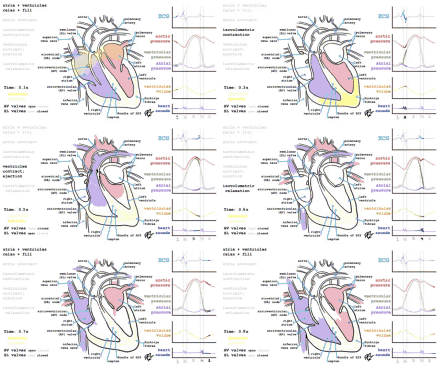
- My study guide :)


- gcse subjects


- Alimentatie sanatoasa si informatii medicale


- anatomy of muscles

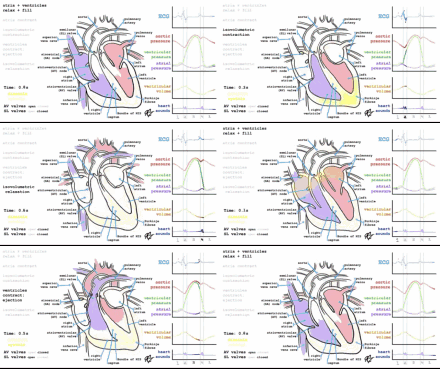
- The Retina


- yolo

- a&p course


- digestive system

- Hernia symptoms


- Types of arthritis

- ABGs


- Anatomy

- heart echo

- Hopefully my bio notes on Synaptic Transmission will fit here :3


- Cranial nerves anatomy


- Heart organ

- About Adderall


- beauty

- biochemistry

- Acupuntura

- Advanced physics


- Blastocystis hominis


É o aminoácido livre mais abundante nos músculos do organismo. Atravessa rapidamente a barreira hematoencefálica, e é conhecida como uma fonte de energia cerebral. ⠀ É convertida em ácido glutâmico, no cérebro, sendo essencial para a função cerebral. Aumenta as proporções de ácido gamaminobutírico, necessário para manter em equilíbrio a atividade mental. Quando um aminoácido é desdobrado, o nitrogênio é liberado. ⠀ O organismo necessita de nitrogênio, mas quando o nitrogênio livre forma amônia, esta é especialmente tóxica para o cérebro. O fígado pode converter nitrogênio em ureia, a qual é excretada na urina, ou o nitrogênio pode se ligar ao ácido glutâmico, processo pelo qual se forma a glutamina. A glutamina é encontrada em grandes quantidades nos músculos, e está prontamente disponível, quando necessário, para a formação de proteínas musculares. ⠀ Esse aminoácido ajuda a manter e aumentar a formação de massa muscular, por isso, sua suplementação é muito utilizada por indivíduos que fazem dietas e por halterofilistas. A literatura referência que a glutamina pode ser útil no tratamento de artrite, doenças autoimunes, fibrose, alterações gastrintestinais, úlceras pépticas e doenças do colágeno, como esclerodermia e lesões teciduais secundárias à radiação, principalmente em pacientes portadores de câncer. A L-glutamina pode aumentar o funcionamento mental, e tem sido utilizada como tratamento em alterações de comportamento, epilepsia, síndrome de fadiga crônica, impotência, esquizofrenia e senilidade. ⠀ Referência: OLSZEWER, Efrain. Noções em Prática Ortomolecular, São Paulo. Ed 2. - @coach_cesaraugusto on Instagram


- Energy Medicine


- Hiv life cycle


- Nurse Bag

- chromosomes

- Medicine


- Beauty

- Nclex

- Coding

- Dementia Sites

- Anatomy-OT PT SLP

- Associate Professor

- Psoriatic Arthritis


- Anatomia y Salud

- Breast cancer tattoos


- DICAS


- Future


- Reproductive system

- ACV

- Pinterest Chiropractic Group Board

- Baby animal names

- Human Anatomy/dissection

- Allergies au pollen


- Nursing Cheat Sheets

- Nursing Notes


- Blood flow through the heart

- Anatomy and Physiology


- Organic chemistry tutor

- LPN - Nursing

- Suture kit

- Bio

- Nurse stethoscope

- Bicuspid Aortic Valve


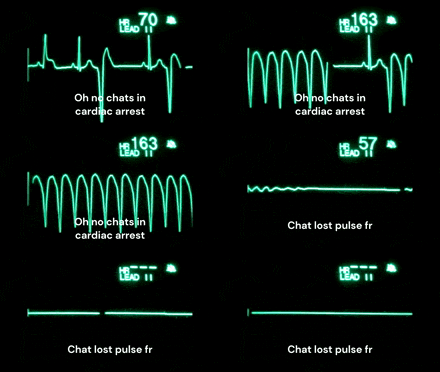
- heart rhythms

- Acid base Balance

- Anatomy human

- Anatomie


- RN

- Brain diagram


- leg cramps


- Physical Therapist


- Baby Nurse

- 6eme


- Cardiac Nursing

- Spinal Cord Anatomy

- Ear Reflexology

- ati teas

- Cardiovascular

- ANATOMÍA

- Amazing Brain

- Internal medicine Doctor

- ENT

- DVM

- Respiratory System

A #ttmnotation #cheatsheet of various #skratch #combos that I used in an IDA battle a few years ago⚔️🛡most of these combos have tutorials on our YouTube...this was the first battle where I chose not to go purely #improv (#freestyle) using these patterns as a general reference during the set. many of these combos were designed to fit into a one bar loop...feel free to try some of these out at www.YouTube.com/TTMacademy #ttm #skratchnotation #scratchnotation #scratchcombo #scratch #scratching #graphicnotation #musicscore #turntablism #djbattle #sheetmusic #turntablist #tablature #calculus #practiceyocuts - @ttmacademy on Instagram

- Anatomy

EKG 21: A flutter with a twist 😜 👶🏻 Beginners should look at the regular atrial activity and pick up atrial flutter. It is kind of saw-toothy and organized. Had this been irregular without discrete p waves you would have picked atrial fibrillation. It is also important to know that the ST segments can be distorted by flutter waves mimicking ST depression, elevation or prolonged QT. Always march out the flutter waves before making these diagnoses. 🧒🏻 Intermediate readers should know the mechanism of common arrhythmias. Atrial flutters are macroreentrant circuits where there is a slow zone of conduction and unidirectional block that allows the genesis and propagation of a large wavefront of electricity. The classic way to figure this out is continuous activity of the chamber involved, in this case the atrial where you see constant undulation of the baseline. 👨🏻🦳 Advanced readers should know that typical flutters have discordance between V1 and inferior lead p wave axis. In this case both are positive. Plus the rate is slower that typical flutter (220 vs 300). Atypical flutters are usually related to prior scar in the atrial (surgery or ablation). Here the circuit is posterior to anterior in V1 and top to bottom in the inferior leads. It can be challenging to know what the exact circuit is, but you should be thinking of a left atrial circuit with this morphology. We terminated this flutter in the mitral isthmus. Usually isoelectric intervals suggest focal tachycardias but if you look closely, most leads have continuous activity, and this pattern can be produced by scarred atria. . . . . #medicalstudent #medicalschool #meded #cardiologia #usmle #md #cardiology #ecg #foamed #hospital #nursingschool #whitecoat #scrubs #physiology #ekg #electrophysiology #doctorsofinstagram #instadoctor #doctors #paschool #heartrhythm #nursepractitioner #health #medical #defibrillator #nurseofinstagram #ccunurse #epeeps #nursingstudent #nursingschool #healthcare 💉 - @therhythmdoc on Instagram

- Anatomy and physiology

- Coaching Training

Research from the Environmental Working Group indicates that a newborn baby can average over 230 toxins in their umbilical cord. 🌟 If this toxic build-up is coming from the mother, imagine how many the average adult has? 🌟 Every day, we are exposed to hundreds of toxic chemicals through products like pharmaceuticals, pesticides, packaged foods, household products, and environmental pollution. 🌟 Are you suffering from: 🌟 -Fatigue -Brain Fog -Weight Gain -Constipation -Skin Rashes -Muscle Aches and Pains -Sinus Issues -Headaches 🌟 As we have become more exposed to chemical-laden products and to toxic chemicals in food, air, and water, we have been confronted with an accelerating rate of chronic illnesses like cancer, heart disease, chronic fatigue syndrome, chemical sensitivity, autism spectrum disorders, ADD/AD(H)D, autoimmune disorders, Parkinsons disease, and Alzheimers disease. 🌟 With our increasing exposure to toxins, it is more important than ever to help your body reduce this toxic load with a seasonal detox. 🌟 Every quarter the team at Equilibrium Nutrition hosts a community detox to help reset our bodies for the upcoming months. 🌟 If you are suffering from any of these symptoms and suspect that you might have toxic build up in your body we invite you to join us for our next community detox on Sept. 14th! - @equilibrium_nutrition on Instagram

- Implantable cardioverter defibrillator/Heart matters

- Biology

- Anatomia

- BIOLOGY GCSE Revision

- Biology

- Biology Drawing

- Education, teaching, school

- ABOUT BODY PARTS

- CIENCIAS

- Endocrinology

- Eye Anatomy

💥Ligamento periodontal vs Osteointegración 🦷🦷. . OSTEOINTEGRACIÓN: Anclaje directo y fuerte entre el titanio del implante y el hueso, la osteointegración esta precedida por el sangrado después de la preparación quirúrgica y por la formación del coagulo en la interfaz hueso- implante (el coagulo forma el armazón para el tejido reparador). El primer hueso que se forma para el anclaje tisular es por medio de la calcificación de células osteoblásticas del coagulo. -LIGAMENTO PERIODONTAL: Cubre completamente la raíz del diente y la une al hueso, permite que las fuerzas que actúan sobre los dientes al masticar o al apretarlos se transmitan al hueso, este las absorbe y de este modo se protege a los dientes frente a una carga que los puede afectar. . Via: @dentips.dvo #periodoncia #periodontology #implantesdentales #implant #odontology #odontologia #dentips #dentaltips #cirugiabucal #anatomiadental #osteoimplante #cirugia #estudianteodontologia #ligamentoperiodontal #perio #periodoncia #implantes #implante #implanteanterior #implantemolar #periimplantiris #periodoncista #miniimplante #odontologia #dentistry #odontoacademy #protesis #prostodoncia #prostodoncista #implant #miniimplant - @odontoacademy on Instagram

- Anatomy

- Breast cancer info

- METABOLISIM

- Blood

- Eye Facts

- Anatomy

- Nursing Mnemonics

- Eye Facts

- Healthy Living

- Rn programs

- biochemistry notes⚕️

- Anger management

- Urea cycle

- Medicine student

- Spinal Cord Anatomy

- Cancer Sucks!

- Cardiac nursing

- Asthma treatment

GABA and Neurodevelopment … GABA; Normally considered an inhibitory neurotransmitter. Binds GABA-A receptor which opens a passive chloride channel. Passive chloride channel = chloride moves down its concentration gradient. This also means that chloride can move into or out of the cell through the channel. … AGE 1 year; How we normally think of GABA. GABA is considered inhibitory. KCC2 channel predominates. KCC2 cotransporter = K/Cl actively pumped out of neuron. … AGE 15 weeks (in total 1 year); The tricky ages. GABA is considered excitatory. KNCC1 channel predominates. KNCC1 Cotransporter = Na/K/2Cl- actively pumped into neuron. … SO WTH? In those 1 year of age chloride is actively pumped out of neurons. Chloride concentration is low, membrane potential maintained by other channels. Remember membrane potential has to do with charges not necessarily the [Cl-]. GABA binds its receptor and chloride flows down its concentration gradient (read: into the cell). Chloride in = neuron membrane potential becomes more negative. More negative = farther from depolarization threshold. … 15 weeks chloride is pumped against its gradient into neurons. Chloride concentration is high, but membrane potential is maintained by other channels. Remember membrane potential has to do with charges not necessarily the [Cl-]. GABA binds its receptor and chloride flows down its concentration gradient (read: out of cell). Chloride out = neuron membrane potential becomes more positive. More positive = closer to depolarization threshold. … At about 15 weeks begins increased expression of KCC2. By 1 year KCC2 should be predominate channel. This helps explain why Benzos/Barbs are relatively ineffective in the tx of neonatal seizures. … 📑:Basics of Anesthesia, Pardo & Miller, 2018 🌐:https://www.ncbi.nlm.nih.gov/books/NBK98206/ 🌐:https://www.ncbi.nlm.nih.gov/pmc/articles/PMC4284054/ 📷:https://neupsykey.com/neonatal-seizures-7/ #anesthesiology #molecularbiology #GABA #medicalstudent #nerd - @dirtymedicineman on Instagram

- Paz Interior

- Acupuncture Fertility

- Cath Lab

- cardiology

- Betrayal Trauma

- Cell project ideas

- Heart

- Pharmacy School

- Urea cycle

Sacubitril/valsartan, an angiotensin receptor-neprilysin inhibitor, has been shown to reduce the risk of CV death or heart failure hospitalization and improve symptoms among patients with chronic HFrEF compared to enalapril, the gold standard angiotensin-converting enzyme inhibitor. This paper reviews the current understanding of the effects of sacubitril/valsartan and highlights expected developments over the next 5 years, including potential new indications for use. Learn more in JACC: Heart Failure. Link in bio. - @americancollegeofcardiology on Instagram

- Bolo fit

- Body

- Major muscles

PERICARDITIS! . . ⬆️Check out the EKG above! What do you see?? . . 👀I see diffuse ST elevation and PR depression (as well as PR elevation in aVR)! This EKG most commonly represents acute pericarditis! . . 💗Acute pericarditis is an inflammation of the sack that surrounds the heart called the pericardium. Pericarditis is the most common disease of the pericardium. Generally self-limiting, pericarditis can be fraught by a significant risk of acute complications and of recurrences. The most common causes are: . . 🦠Viral- Mycobacterium tuberculosis, Borrelia burgdorferi, Parvovirus B19, and Epstein-Barr virus as the most prevalent agents . . ❓Idiopathic- unknown cause . . 💘Post cardiac procedure- CABG, PCI, ablation, TAVR . . 👤Autoimmune (specifically SLE) and hypothyroidism . . ⚠️Radiation for malignancy (usually lymphoma) . . 📑Based on current European Society of Cardiology guidelines (1), at least 2 of 4 criteria are needed for the diagnosis of acute pericarditis: 1) chest pain; 2) pericardial rub; 3) electrocardiogram (ECG) changes; and 4) new or worsening pericardial effusion. The best diagnostic tests to preform are echo, and when available CMR. . . 💊Treatment for pericarditis revolves around suppressing the inflammation as well as preventing recurrence. The most common regime is ibuprofen 800mg TID + colchicine 0.6mg BID+ PPI. If the patient has CAD or myocardial involvement high dose aspirin is preferred. Steroids are reserved for third line treatment as they can lead to high rates of recurrence. . . ✅Familiarize yourself with this diagnosis! I guarantee you’ll see it once or twice in your career! Reference Chiabrando et al, JACC 2020. . . #Cardiology #cardiologia #heart #viral #medicine #medical #hospital #usmle #resident #intern #meded #medicaleducation #foamed #instadoc #medstudent #nursing - @cardiologyoncall on Instagram

- Arteries

- Coronavirus Crown [520x1280]

- 50 words

- GCSE revision

- Acupuncture points chart

- Aqa a level chemistry

- heart

- kanda

- Cardiology nursing

- Rn programs

- Yeast Infection Remedies

- Natural Birth Control

- Auriculo

- Cardiology Is My Passion

- Gross Anatomy

- anatomie

- EMS world

- Chemistry study guide

- Blood Components

- BASE CROCHET

- Economics revision

- Ekg interpretation

- Human Body Name parts

- Anatomy

- 21 DAY FIX

- FAMILY DOCTORS

- biology

- Cvid

- Beauty /skincare tip diy

- Biology notes

- Medical + First Aid

- Oa

- Calligraphy and Annotations

- Dental INFOGRAPHICS | Dentist Fortitude Valley

- Eye Anatomy

- About Adderall

- Health

- Becoming A Nurse

- Cardiac Anatomy

- A+ Postpartum Doula

- Essential oils

- Heart rhythm

- chromosomes

- Endocrine & Hormones

- Medicine

- Medical students

- Funciones de las teclas-F

- Reproductive system

Take a look at what the coronavirus possibly does to the body. Nearly every organ system can be affected. 📷 @sciencemagazine - @drsanjaygupta on Instagram

- Take Heart my Friend

- Heart organ

- Rabbit anatomy

- Imagen y Accesorios by Lorena

- Chemistry

- Career goals

- Dr Ali

- Histology

- Paramedic degree

- MeNEIrEs DiSeAsE

- Acupunctura

- Cardiovascular Training

- Adult Health

- Bullet Journal & Bucket List

- La reproduction

- chemistry

- All Cooking stuff

- Medical Assistant

- Acupuntura

- Nurse stethoscope

- Cardiac Sonography

- Nurse Practioner!

- Meridian lines

- Health and safety poster

- Human

- Cell - Structure

- math symbols

- science diy

- Surface chemistry notes

- gcse pe

- Dibujos

- Biology

- Respiratory

- Addiction Therapy

- medicine *warning: gross*

- anatomie

- Medical Laboratory Scientist

- biology

- Folders

- renal physiology

- Acls

- Body Tissues

- Agopuntura & Medicina Cinese

- 114 Test 2

- Chemistry

- Cardiac Anatomy

- math symbols

- pa school

- Family Nurse Practitioner

- Angio

- Human anatomy

- Castles

- Health

- pocket diary

- Nurse in action

- Anatomy

- Implantable cardioverter defibrillator/Heart matters

- Notes

- Acupressure

- Outfits

- Medical assistant program

- Body & Health

- Anatomy

- Anatomy

- Ekg interpretation

- English...

- Enfermagem ❤️

- The cells in our medical textbook have subtle facial expressions based on their health.

- Anatomy notes

- Acute Care Nurse Practitioner

- BotAnY

- Lpn schools

- Congestive Heart Failure

- abstract science

- Apologia science middle school

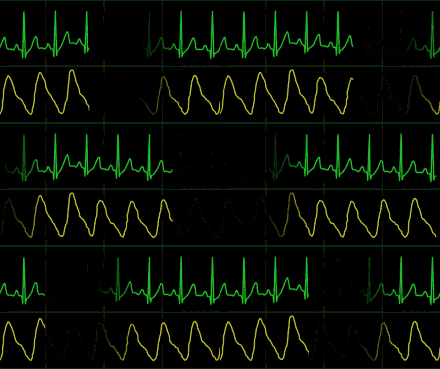
ECG is an important graph it represents the pathology of our heart #medical #mbbs #ecg #heart #guli #saqartvelo #tbilisi #medico #physiology #medicine #international #community - @med_world_tbilisi on Instagram

- Anatomy

- Cauda Equina Syndrome

- MY CAREER

- SISTEMA GASTROINTESTINAL

- Human Anatomy/dissection

- Arritmias Cardiacas

- Anatomy

- Organic chemistry tutor

- Battery Operated

- biologia

- student

- cardiology

- Química y Biología

- Anatomy

- Chemistry notes
